Tuesday, April 8, 2014

Divergent and the Dystopian Trend..

Note: This is a guest post authored by Elizabeth Eckhart (Find her on Twitter at @elizeckhart).

Divergent, which premiered on March 21st in US and has already surpassed $100 million at the US box office, feels in many ways like familiar territory for fans of Young Adult films adapted from books: a dystopian future setting (Chicago, specifically) that includes a rigidly divided society and oppressive ruler; a gutsy female lead actress (Shailene Woodley) as Tris, who is the “special one”, clearly destined to break out of the confines her world is trying to force her into; a hunky male love interest named “Four” (Theo James); and plenty of training montages of Tris growing stronger, bouncing back from getting hit, etc.

If this sounds familiar, it’s probably because it’s somewhat similar to The Hunger Games, a movie whose model of blockbuster success undoubtedly taught Lionsgate executives that adapting wildly successful young adult books was a pretty surefire way to bring in dump trucks full of money, regardless of the quality of the films themselves (the second Hunger Games movie Catching Fire is out on DVD/BluRay and streaming online now, details here). The Divergent books, penned by twenty-something first time author Veronica Roth and seemingly parallel to The Hunger Games series, sold and continues to sell so many books that a film adaptation was a near certainty.

For those who haven’t read the books, Divergent covers the story of Tris, who is in the perilous position of having tested as a “divergent” in her war-torn future society’s round of trials by which young adults are forced to choose one of five distinct classes based on their personality traits - “Abnegation” for those that selflessly help others, “Dauntless” for those that are brave and bold, “Amity” for the peaceful who work hard and keep to themselves, “Candor” for the most truthful, and “Erudite” for the intelligent. Murmurs of a conspiracy against the established order set the backdrop for Tris and other new initiates to be psychologically and physically tested, and when Tris finds out she is “divergent”, and thus able to fit into any class, she also realizes she’s therefore a threat to the social order, setting up the main thrust of the plot.

Src: deviantart.net

I found Divergent to be mildly entertaining, but ultimately underwhelming. Shailene Woodley is a good actress, but there’s just something flat and sort of one dimensional about the character of Tris as the screenwriters adapted her that makes it hard for the movie to come to life as much as Hunger Games did. As much as I loved the book, I kept feeling like the movie really wanted her to be a “kicking butt and taking names” type of super-heroine while also simultaneously portraying a sort of delicate, emotional fragility, but the result on the screen just doesn’t come together. Even Tris’s romance with Four seems a little flat, to the point where a few times I almost felt taken out of the movie and more like I was just watching some awkward acting from the side of a movie set.

I wound up mostly enjoying the movie (probably because I wanted to like it so much), but ultimately wasn’t that impressed, unfortunately. There are definitely some nice action scenes, and the testing sequences came out looking pretty cool, but for the most part I feel like a lot was lost in the adaptation - the book has a nice, brisk pace to it that keeps you turning pages, while the movie sometimes felt like it was stumbling a bit in trying to find a rhythm, and I just didn’t connect emotionally with a lot of the acting. Also, compared to the Hunger Games, I couldn’t help feeling like the setting was a little bit drab and boring - a similar story about survival against all the odds, but without all the colorful clothes, food, scenery and other trappings from the world of Katniss.

Regardless of what I think, though, sequels to Divergent have already been announced, so we’ll see if the movies can improve down the line, or if we’ll eventually see a gritty reboot of some type - I wouldn’t put it past Hollywood. For now, I definitely have to say I prefer the books, just as I prefer the Hunger Games books to their film adaptations.

Thanks Elizabeth for this interesting and relevant post! :)

PS- Divergent movie releases on April 11, 2014 in India. 


Friday, April 4, 2014

The Magic of Classics!

There must be a reason why classics are called classics. There's this whole aura around them that makes you feel so different, and not just because they belong to a specific period in time. There was dystopia back then too, futuristic stuff, incredible science fiction and best of all, incomparable fantasy. What is it that makes us go back to classics for that 'complete and unabridged' feeling of satisfaction? How are classics so appealing? In this online course (MOOC) called The Future of Storytelling, they mentioned the way literature transformed; how earlier it was "more group and culture based" and now it is "more introverted and individualistic". 
<3

Stories were more about a place as a setting and then about the characters who form an integral part of the story. Important characters were barely just one. There were complete, imaginative worlds where fantasy came in. Humans interacted with other living forms by talking and hanging out with them without feeling weirded out. If you got to take advice from a caterpillar, you simply did. You did not make faces or feel strange or think it's unnatural. If you wanted to fly to Neverland and meet naughty pixie fairies, you simply needed to believe that you could fly. You didn't wait for a superhero or logic to come into the picture. I love that optimism, that simple, unbiased acceptance of the world for what it is. I love the lack of criticism and analysis. It makes me as a reader feel how vast and believable everything is, how it is simple and possible if you just believe in it. It's not always how it happens in real life but you're far better off if you hold on to these beliefs you inculcate while reading, one major reason being that you're always optimistic!

Let's consider some examples. Peter Pan (J.M. Barrie) is an imaginative story beginning with the simple idea of a boy who doesn't want to grow up, which is pretty much a normal feeling in kids. When you read the story, however, you're so drawn into that boy's adventures, his feelings and thoughts and behaviour, his interactions, other characters who're associated with him and a whole new world of Neverland where you meet pixies and pirates. When you read The Wizard of Oz (L. Frank Baum), you see a normal girl in Dorothy who falls into an adventurous situation and there're scarecrows and talking animals and witches and castles.  

I remember being absolutely petrified and hooked to The Strange Case of Dr. Jekyll and Mr. Hyde (R.L. Stevenson) when I first read it, just because it was so different (and scary) from anything I had ever read. It was a piece of wonder and I was nothing short of amazed. It's such a deep story, coming out of the concept of man having two sides: the good and the evil. A Christmas Carol (Charles Dickens) was just as creative and although slightly dark, it's beautiful in the way it's told. There are many other examples, including Gulliver's Travels (Jonathan Swift), Frankenstein (Mary Shelley), The Invisible Man and The Time Machine (H.G. Wells) that make you feel so warm and nice and 'classic' when you read them! 

Have an open and accepting mind, and you'll love all these stories. I watched Alice in Wonderland (Lewis Carroll) yesterday when its second movie adaptation was running on HBO. I haven't read the book as yet but I do like the story. It's so full of characters, yet you don't feel lost. It's a small, unique world. It shows the protagonist of the story as a strong, dreamy and imaginative girl who likes to do as she likes and has the ability to stand up for her own. Apart from what she does in Wonderland, it's quite cool the way she behaves when she's at the family gathering with her family and relatives, the way she signs up for a business deal instead of allowing her mother to marry her to a lord. This book came out in 1865. Awesome, much? :)

It's not just about the magical, it's about the stories based on societies and human-people too. They're all incredibly detailed and imaginative. I'm not denying the unique essence of modern literature, new genres and quick reads, but classics such as these have their own sense of time. You always feel different with such books. If you haven't read these, I'd suggest you should! A personal recommendation would be Dr. Jekyll and Mr. Hyde and although I read it in school, an abridged version most probably, I'd still think it's worth a read.

Src: cdn.comicartfans.com
“With every day, and from both sides of my intelligence, the moral and the intellectual, I thus drew steadily nearer to the truth, by whose partial discovery I have been doomed to such a dreadful shipwreck: that man is not truly one, but truly two.” 

***

What do you think? Do you like these books as much? 

PS- How about the blog's new look? ;)


Thursday, March 13, 2014

Review: Private London by James Patterson

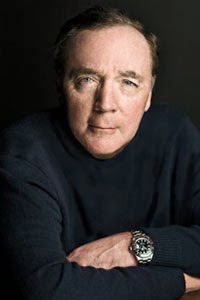
James Patterson
Mark Pearson


Title: Private London
Author: James Patterson and Mark Pearson
Genre: Thriller / Mystery
Published: In 2011 by Random House
Pages: 357
Find it at: Amazon
My Rating: 3.5/5!


Goodreads Blurb!
SOMETIMES WHEN THE NIGHTMARE ENDS - THE TERROR IS ONLY JUST BEGINNING

For Hannah Shapiro, a beautiful young American student, this particular nightmare began eight years ago in Los Angeles, when Jack Morgan, owner of Private - the world's most exclusive detective agency - saved her from a horrific death. She has fled her country, but can't flee her past. The terror has followed her to London, and now it is down to former Royal Military Police Sergeant Dan Carter, head of Private London, to save her all over again.

In central London, young women are being abducted off the street. When the bodies are found, some days later, they have been mutilated in a particularly mysterious way. Dan Carter's ex-wife, DI Kirsty Webb, is involved in the investigation and it looks likely that the two cases are gruesomely linked.

Dan Carter draws on the whole resources of Private International in a desperate race against the odds. But the clock is ticking... Private may be the largest and most technologically advanced detection agency in the world, but the only thing they don't have is the one thing they need - time.

James Patterson's white-knuckle rollercoaster has just reached London. Buckle up, it's one hell of a ride!

My Thoughts!
The book is set in London, with the story revolving around the London arm of the world-famous detective agency, Private International. A client from US, a scientist and a millionaire, sends his daughter Hannah Shapiro to study at Chancellors in London. Dan Carter, an ex-war veteran is given the responsibility to take care of Hannah, but there's a lot going on in the city that he needs to keep his eye on. There're murders with weird mutilation and the police forces seem baffled too. Hannah gets into another problem which becomes the top-priority case for Private to deal with, but everything's strange and they're trying to figure out what to do.

Basically, I was kind of hooked to the plot when I started. It was a little disturbing, yes, but it seemed promising. It was also simple in the beginning and then as new characters were added and the story developed with new dimensions adding on to it, it became slightly confusing. I think it was because there were two crimes going parallel to each other, and both forces (police and Private) kept getting involved in both. You'd probably understand the book a lot better if you also understand that lingo badass cops use. The book's filled with those phrases. And I've noticed that James Patterson isn't much of a comma user. There are always full stops. Short sentences. Full-on detective style. 8|

Talking about the story, like I said, it got a bit confusing because of two simultaneous plots, but it was nonetheless quite gripping, especially because there are small cliffhangers at the end of almost every chapter, so you feel those goosebumps in varying degrees and can't just wait to move to the next one. There were moments in between when I was shocked or surprised over the twists. Some twists made my jaw drop, but once you get used to it and understand the awesome crafty way criminals' and detectives' minds work, you'd like it! I have to admit, though. I felt the ending scenes to be a bit rushed up and the major reason, the true reason for everything happening was either too big to believe or too ridiculous. Or maybe it's because I am not aware of facts pertaining to it, since it's war-related. (I kind of suck at history)

The writing is mostly easy to understand, if you ignore the cop-lingo. I like the way the characters are introduced, in parts and in twists. The story does have a lot to teach and is supplemented with knowledge and an interesting writing style. Since it's like a race against the odds and events that occur, we don't really have time to dwell on the past or experiences of people involved, but the book does take care of it and it works wonders because you don't only read about what is happening and how events are unfolding, you also implicitly get to understand why. That makes the reader get more empathetic to the characters, victims or criminals or detectives. The only thing that might hamper the reading experience would be if you have trouble guessing and understanding the characters' intuition, because there aren't explicit details as to what actually is the case. The writing style is deduction based, it assumes you'd know from the phrases the characters use what is happening, instead of putting it in plain words for the average reader to understand.

Overall, it is worth a read if you're into murder mysteries and care to read about terrorism/war related aspects. I'd suggest the book to mature readers since it can be a little hard to understand and the murders aren't exactly clean. 
Some phrases/sentences from the book I liked:

"Things happen for a reason. And when we understand why- then we can take steps to deal with them"

"Justice as far as the law was concerned was a matter of science. But people weren't machines. She didn't know what the other woman deserved. That was way beyond Kirsty's area of expertise. Police didn't get to make that call. Their job was to unearth the facts, and Kirsty didn't believe she had the moral compass to put these facts in order and make a judgment."  

Thank you Random House publishers for this book! :)


Wednesday, February 26, 2014

Review: Mastermind by Maria Konnikova

Maria Konnikova
Title: Mastermind: How to Think Like Sherlock Holmes
Published: 2013 by Canongate Books Ltd.
Pages: 259
Genre: Non-Fiction
My rating: 4/5

Goodreads Blurb!
No fictional character is more renowned for his powers of thought and observation than Sherlock Holmes. But is his extraordinary intellect merely a gift of fiction, or can we learn to cultivate these abilities ourselves, to improve our lives at work and at home?

We can, says psychologist and journalist Maria Konnikova, and inMastermind she shows us how. Beginning with the “brain attic”—Holmes’s metaphor for how we store information and organize knowledge—Konnikova unpacks the mental strategies that lead to clearer thinking and deeper insights. Drawing on twenty-first-century neuroscience and psychology, Mastermind explores Holmes’s unique methods of ever-present mindfulness, astute observation, and logical deduction. In doing so, it shows how each of us, with some self-awareness and a little practice, can employ these same methods to sharpen our perceptions, solve difficult problems, and enhance our creative powers. For Holmes aficionados and casual readers alike, Konnikova reveals how the world’s most keen-eyed detective can serve as an unparalleled guide to upgrading the mind.

My Thoughts!
Mastermind is a useful book. Oozing with optimism and smartness. If you're already quite smart, this book would make you feel awesome. Plus, you'd even know where your smartness comes from, while learning jargon-ic words. And if you've been struggling with those very things they give Holmes-ian solutions to, you'd feel like you're on the path to mind-improvement!

The book's divided into four parts, beginning with an understanding of oneself, our brain and capacities and abilities. What we want, where we want to reach, how do we look at things, what is our approach? The next section focuses on the power of observation and imagination, what it is to be mindful and how it helps, techniques for observation and value of creativity. The third section talks about the art of deduction, understanding meanings from what information is available, education and self. The final part deals with the science and art of self-knowledge. Jeez. This seems like such a ramble of jargon.

But the book isn't that way! It's based around all these concepts as Sherlock Holmes, the famed fictional detective used them. According to the book, 'the detective who elevated the art to a precise science'. He's a legend in the field of detection and mysteries, solving crimes in a way that people find impossible. The book takes his perspective into account and supplements the theory with cases and examples from his mysteries. This makes the book a lot more interesting than how it'd have otherwise been. It states the differences between Holmesian thinking and Watsonian thinking, and how we could shed the latter for the former. 

I definitely underlined a lot many paragraphs from this book, primarily because I felt that to know the gist of the whole book, one could simply read those paras and be done with it. The only thing I felt somewhat lacking was that it seems repetitive, in the sense that it goes into great detail for each concept. Probably that wasn't necessary. That was what sometimes made me not pick up the book even after long breaks. But yes, once in the flow, you get into the rhythm and enjoy reading about how one can be a better observer, deduce from what information is available, using imagination and creativity! *_* 

I'd include some lines from the book that made me learn quite a bit. 

'You think; you judge; and you don't think twice about what you've just done.' 

'Happy mood = wider sight, bad mood = limited sight'

'Motivation matters. Individuals who are motivated correct more naturally, and more correctly.' 

Then there was this concept that suited so well with my situation while I was reading this book: 'Need for Closure: a desire of the mind to come to some definitive knowledge of an issue.' Our minds don't rest until they're clear about the issue.

The book also talks about how even though we thrive on the idea of creativity and imagination, we value creativity only on the surface and imagination can scare us like crazy. "As a general rule, we dislike uncertainty. It makes us uneasy. A certain world is a much friendlier place. And so we work hard to reduce whatever uncertainty we can, often by making habitual, practical choices, which protect the status quo."

There's also discussion on habit, self-confidence, uniqueness, adaptability and beliefs. All relating to Holmesian thinking. I found the book quite innovative and unique in this aspect. It discusses the psychology of mind with examples from a fabulous fictional character, and hence the book seems like such an easy read! It isn't hard to decipher, there's enough explanation for the novice to understand. I found some tips and concepts quite useful and they come up when something related to them happens in reality. Coolness, actually. 8| 

Tuesday, February 4, 2014

Top Ten Tuesday: Books that will make you cry!

Top Ten Tuesday is a weekly meme hosted by The Broke and The Bookish, with a different 'Top Ten' list each week. This week we're talking about: Books that will make you cry! 

While I know some titles that will definitely make me cry, I haven't read them yet, mostly because of my aversion to very sad stories. But still, ironically I love emotional reading and books that make me cry. Going by the books I've read, I'll list those that made me cry. (Crying while reading an emo book, by the way, is in no way a bad thing. It just tells you how awesomely expressed it is! :') )

In no particular order (except for how they pop into my head):

1. Looking for Alaska by John Green: There's something heart-breaking about that story, facilitated by the way the book's written: filled with metaphors and philosophy. You realize it's so not a normal book. It won't promise you happy endings, but it'll give you the reality you need to know. 

2. Shadow Kiss by Richelle Mead: This is the third book in the Vampire Academy series, supposedly all badass and "cool". Yep, but I found this book quite high on emotions and the ending (although the story's going on in the subsequent books, but still) made me shed a tear or two. Complete with that feeling of emotional surge!

3. Handle With Care by Jodi Picoult: Jodi Picoult's books are based on familial ties and health problems that affect them. Those stories are so detailed, going into the life of each character, that I can't help feeling empathetic for all of them. And with this book, the last chapter was "Ohmygoodness NOO!!!" :'( Perfect cry-material. 

4. The Last Song by Nicholas Sparks: Probably the only Nicholas Sparks book I've ever read, but boy, did it make me cry! Towards the end when tragedies happen, you'll feel sad about it because you've so grown used to the characters, edging them on to optimism, and then BAM!

5. A Thousand Splendid Suns by Khaled Hosseini: I admit to not having read this book in totality. Okay, I did not even read less than half before it made me cry twice already! I like emotional books, but this was an open invite for a torrential tear-storm! I still haven't plucked up the courage to start reading And the Mountains Echoed. 

6. The Lost Girl by Sangu Mandanna: I don't recall if it made me "cry" per se, but it's one of those rare books with a fantasy base but so emotional, it'll make you feel the same emotions like the characters do. It's one my favorite reads in the past year, and among the top favorites by Indian authors. :)

7. Angry River by Ruskin Bond: I haven't read this in years! I just remember reading this book as a kid, and crying over the scene where this little girl is stuck in a tree due to the flood that took her home, and grandfather away, and then her favorite doll who's like her friend slips from her hand and into the flooding waters. God!

8. My Sister's Keeper by Jodi Picoult: The ending! *wails* One, that wasn't expected. Two, it was just too sad to not cry about. Three, Jodi Picoult is Jodi Picoult is a heart-breaker. 

9. Hold Still by Nina LaCour: Dealing with a friend's suicide, this book portrays the feelings of grief, anger and sadness in the protagonist and the way she comes to closure. It's painfully beautiful. :')

10. The Fault in Our Stars by John Green: I admit to having this book making me feel a little less 'Oh-God-I'll-cry', but the tears came nevertheless. Why's Mr. Green such a heart-breaker? 

What about you guys? Which books made you tear up?! If they're not too devastating, I'd love to read them!